Most companies will not fail at AI because they chose the wrong model. They will fail because they never changed how work actually happens.
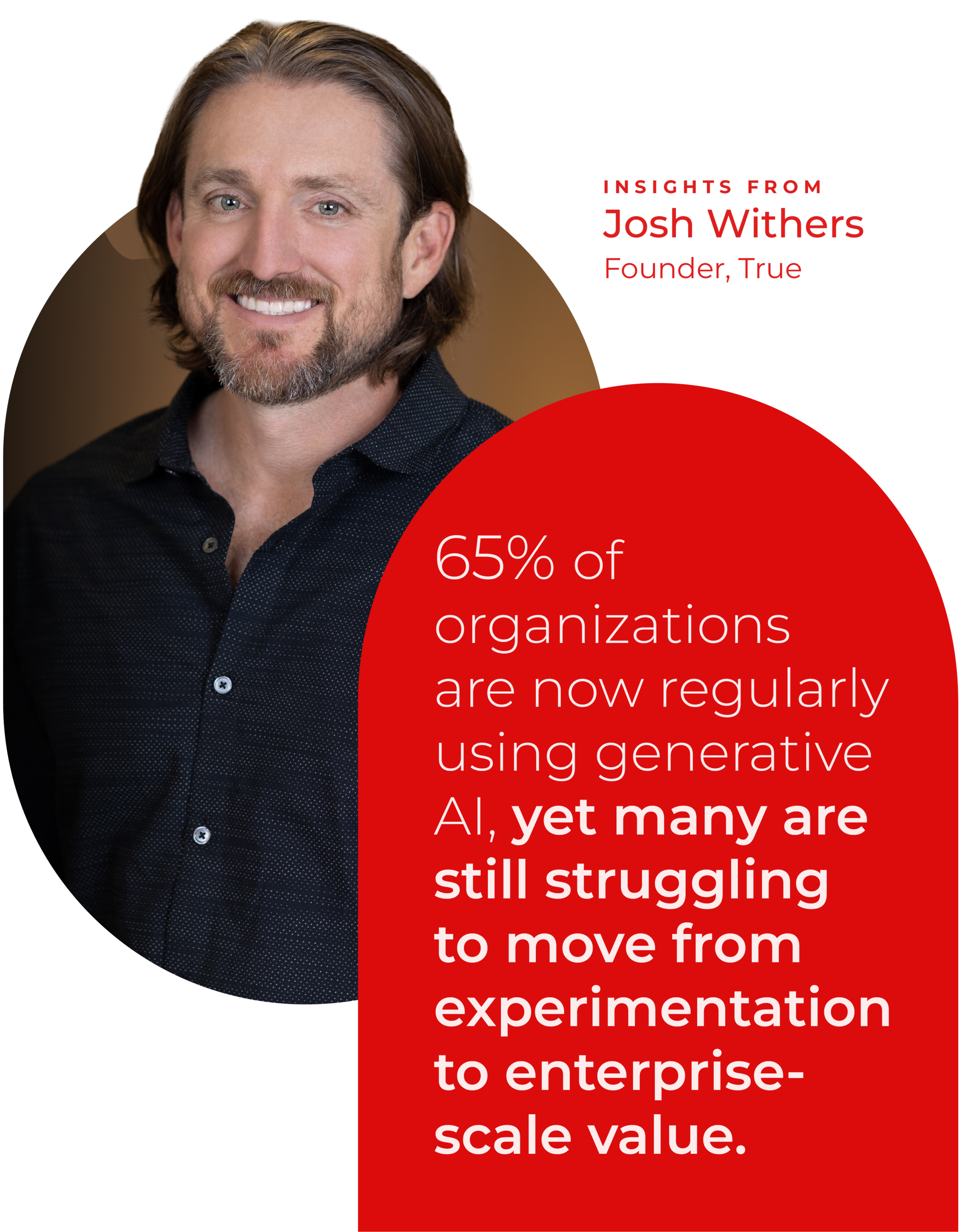
Over the past year, organizations have poured time and capital into generative AI. They launched pilots, tested use cases, and rolled out tools that impressed stakeholders in demos. On the surface, progress looks real but underneath, adoption remains shallow, workflows look the same, and business impact stays limited. McKinsey’s “The State of AI” report confirms that 65% of organizations are now regularly using generative AI, yet many are still struggling to move from experimentation to enterprise-scale value.
This gap between capability and execution is where most AI strategies break down. In my previous article, “Winning with AI: Building a Culture of Adoption,” I discussed how culture drives transformation. While that still holds true, execution is what truly operationalizes change. It requires leaders to rethink how their companies work at a systems level. The winners are redesigning workflows with AI embedded, rather than treating it as an add-on.
AI Fails When It Lives Outside the Workflow
AI adoption is a distribution problem, not just a capability problem. If it does not meet users where they already work, it will not scale. Most AI tools live in separate tabs, standalone applications, or disconnected assistants. When every extra step matters, that design choice creates friction and kills adoption.
Block CEO, Jack Dorsey, notes the most successful digital platforms start by integrating simple utilities into everyday use, and the same principle applies to enterprise AI. The goal is not to give people more tools, but to remove steps from their current workflow. If a recruiter has to leave their workflow to use an AI “helper,” for example, they often won’t. If AI is in the interface itself, adoption becomes invisible and inevitable.
Expect Performance To Get Worse Before It Gets Better
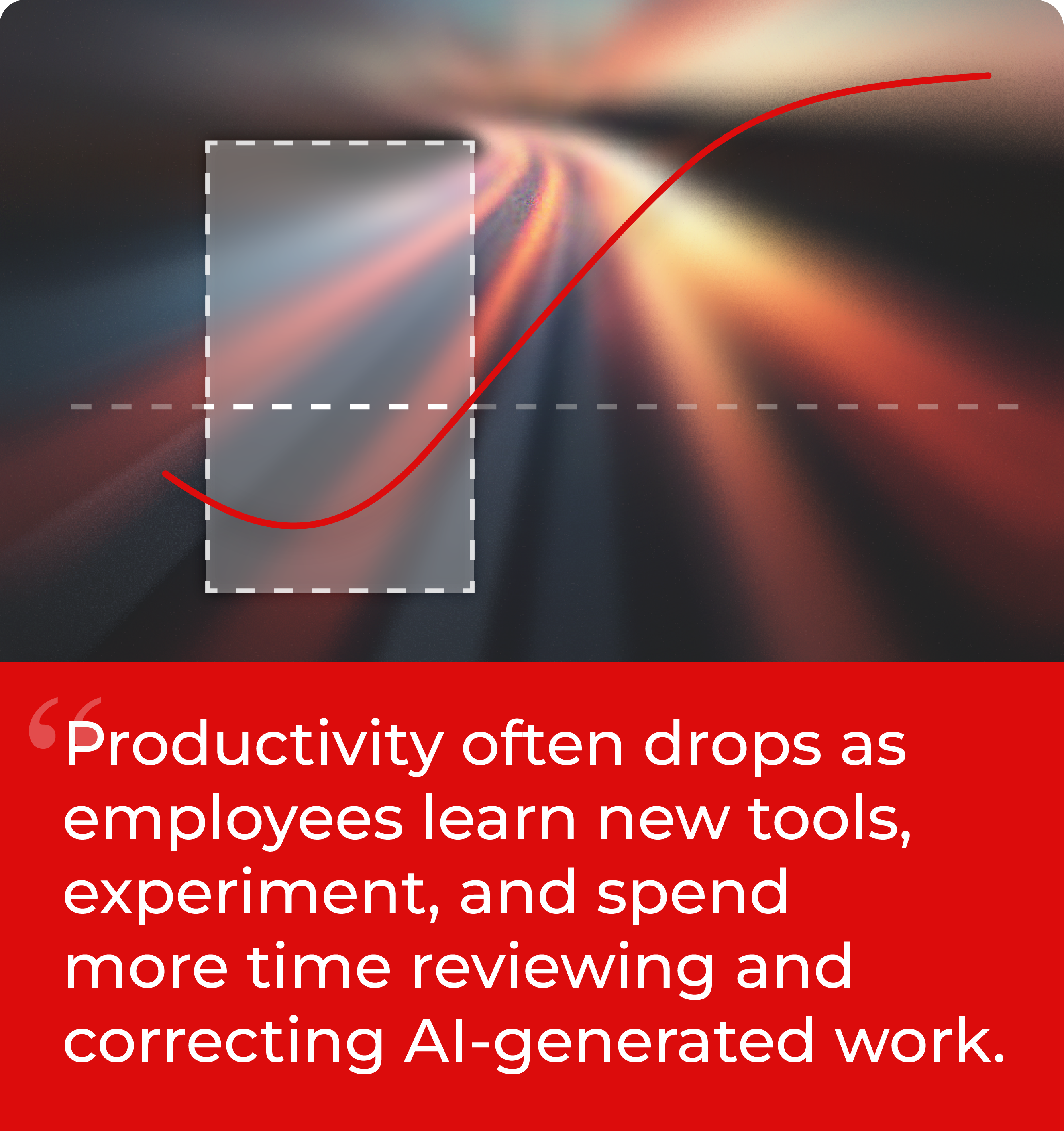
Many organizations misread what happens in the first phase of adoption. Productivity often drops and output quality becomes inconsistent as employees learn new tools, experiment, and spend more time reviewing and correcting AI-generated work. Leaders may conclude that the technology is not delivering but this is simply the predictable and necessary learning curve.
Organizations that successfully scale AI clearly communicate early expectations and invest in skill-building, not just tooling. Prompting, editing, and validation become core skills for employees and no longer optional. McKinsey’s data shows high-performing companies, or “AI shapers,” spend significantly more of their AI budget on change management and training than their peers.
AI Gets You Close but Leadership Delivers the Outcome
AI can take you most of the way, but human judgment completes it. As I outlined in “Beyond Traditional Executive Search with AI,” the goal is not to replace human expertise, but to significantly amplify it in the right places.
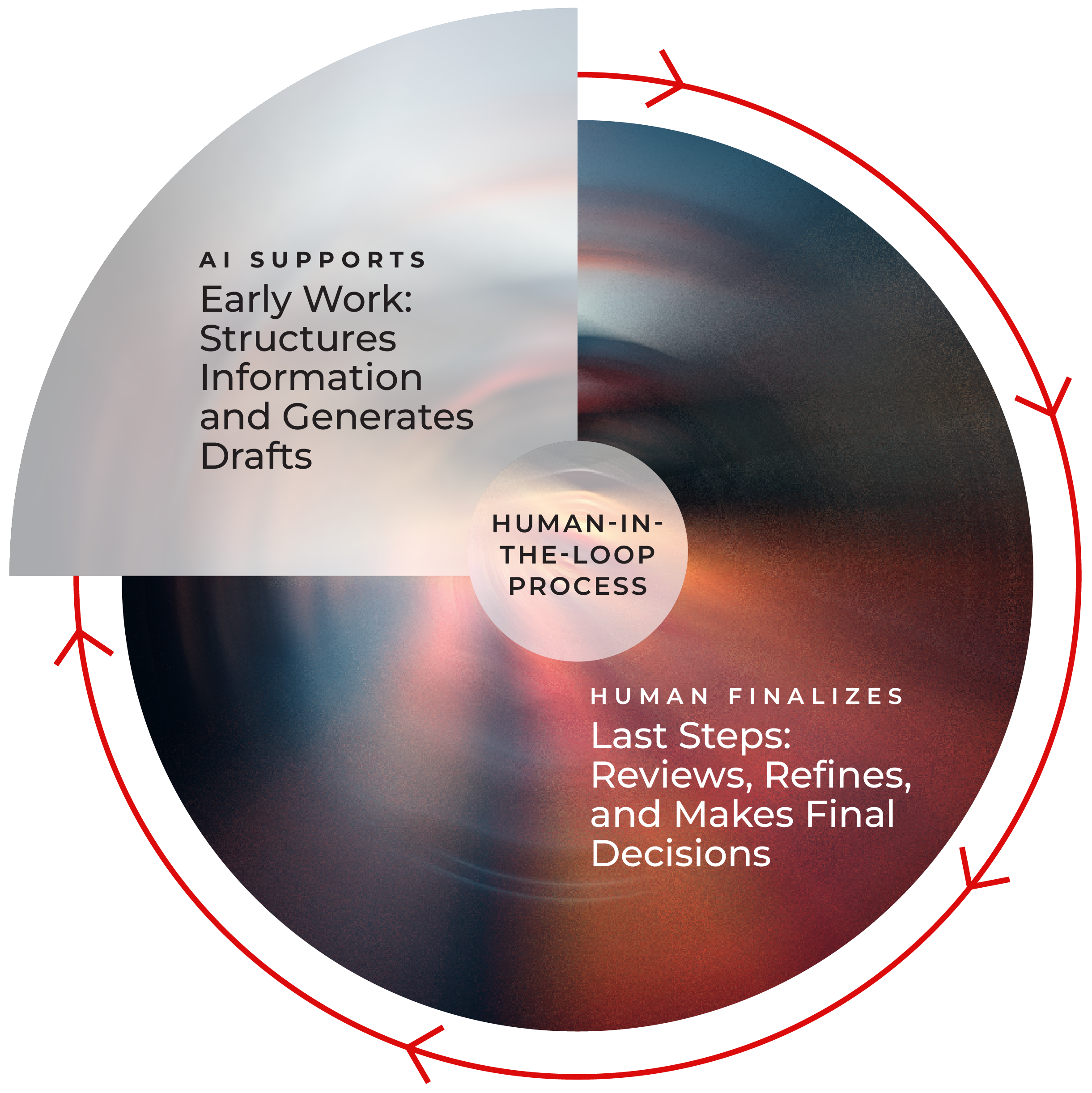
Outcomes improve when organizations structure human involvement into processes intentionally. Successful organizations use clear “human-in-the-loop” processes where AI focuses on early work like structuring information and generating drafts, and humans step in to review, refine, and make all the final decisions. McKinsey reports that inaccuracy remains the most cited AI risk. Human oversight is therefore a strategic requirement, not just a safeguard.
A growing number of companies are also already exploring “agentic management,” a model where leaders focus on coordinating the roles and communication between human experts and AI agents. This requires new skills:
- Defining clear handoff points between AI and human work
- Holding people accountable for output review
- Knowing when to escalate decisions
- Building feedback loops that improve AI performance over time
Leadership in an AI-integrated organization focuses less on directing tasks and more on orchestrating systems.
Organizational Design is the Real Constraint
When AI adoption stalls, leaders often look at the technology, questioning the model, the vendor, or the tool itself, but in most cases, the problem sits elsewhere. Organizations fail to scale AI because they do not redesign the system around it. There’s a fundamental “coordination gap” in modern firms: productive individuals do not automatically make productive firms. While AI makes the individual faster, if the organizational “factory floor” isn’t redesigned to handle that speed, the gains are lost in the friction between teams.
Workflows remain unchanged, teams lack training, systems stay disconnected, and expectations do not shift. AI exposes these existing weaknesses; it does not create them. This is why some companies see meaningful gains while others plateau after early pilots. History shows that technology is only as good as the speed at which it can be implemented across a community. The difference is not access to technology, but the willingness to rethink how work happens.
To bridge the gap between individual effort and organizational results, leaders must layer in intentional top-down design. Teams can now transfer their unique knowledge to AI agents, for example, by creating custom Gems in Google Gemini, Skills in Claude, or by asking their software providers to layer this in. These tools make it simple to integrate how the company operates, along with its distinctive tone of voice, culture, branding guidelines, and preferred output structures. This ensures AI-generated output consistently reflects the organization’s identity and delivers aligned, on-brand results.
A Practical Path Forward
Execution should now be the priority for organizations, not experimentation. Leaders can start with this focused approach:
- Map current workflows by identifying where decisions are made and where time is spent, focusing on what actually happens, not what should happen.
- Select one or two points where AI can reduce friction or improve quality. Don’t try to transform everything at once.
- Hire or designate individuals responsible for automation, rather than relying on a bottoms-up approach.
- Integrate AI directly into existing systems rather than creating new platforms.
- Define human roles clearly, including accountability for output review and escalation.
- Allocate time for change management, mapping new workflows, and implementing the training to support adoption.
- Monitor usage and output, closely tracking how workflows and time-spend evolves with adoption.
This shift is not about changing out software vendors, but reimagining how these new tools will change the tasks, workflows and organizational design for your company.
Companies That Win Will Not Look “AI-First”
The organizations that succeed with AI will not stand out because they use it more, but because they operate differently. Their workflows will move faster, their decisions will feel more informed, and their teams will spend less time on low-value work and more time on judgment and execution. AI will not be visible as a separate layer, but be embedded into how the organization functions. That is the true shift from “wow” to “how.”
Most companies still focus on what AI can do but that phase is ending. The next phase demands discipline and requires leaders to move beyond experimentation into operational change. This is where advantage is built and it will not come from the technology itself. It will come from the organizations that have the conviction to redesign how work gets done.
INSIGHTS FROM

Josh Withers
Founder, True
For media inquiries, contact Jillian Ruggieri