Future-proofing a brand isn’t about predicting the future. It’s about building the capacity to adapt faster than change itself. This mandate has never been more urgent in a world defined by the acceleration of taste cycles, cultural fragmentation, and the rise of “quiet influence” over loud marketing.
The executive profiles of the past simply will not work for the future. Today’s leadership decisions do more than shape growth. They have the power to protect or erode brand reputation. True’s Consumer Practice has seen a shift: brand power is no longer just within the realm of marketing, it is a CEO-level and enterprise-wide priority.
The Modern CMO
The role of the Chief Marketing Officer (CMO) is undergoing a significant evolution. Tenures are shortening, titles are under pressure, and active contention surrounds the core responsibilities of the role. To future-proof brands, leaders must move far beyond the traditional definition of “head of marketing” into a hybrid role that blends strategist, technologist, culture reader, and growth architect.
Operationally, the most distinct shift is the compression of decision-making. For example, luxury brands need to maintain long-term heritage and exclusivity while responding to change in real-time, and a single error or cultural misstep can quickly erode decades of carefully built brand equity. These same challenges exist for any brand-dependent business beyond luxury, whether a PE-backed consumer staple, or a growth-stage disruptor. This pressure requires leaders across all sectors who can navigate the demand for brands to act as cultural signals, not just products.
Strategic Leadership Over Execution:
The Data
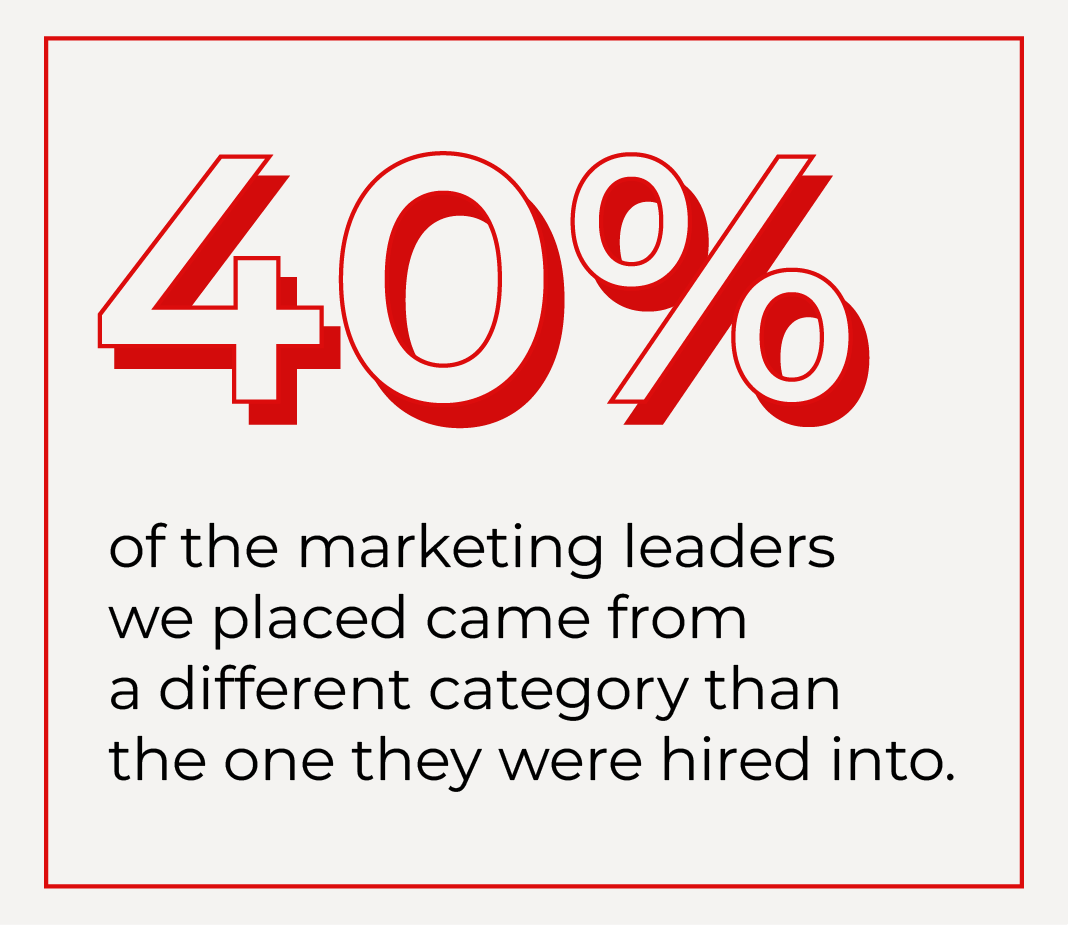
We are seeing a significant shift in talent sourcing strategies. Strikingly, roughly 40% of the marketing leaders we placed came from a different category than the one they were hired into. This indicates that companies prioritise transferable marketing leadership skills over pure domain expertise.
Over the past three years, 88% of True’s marketing placements have been at the C-suite and SVP / VP level. This is a clear signal that companies are prioritising strategic leadership hires over purely executional roles.
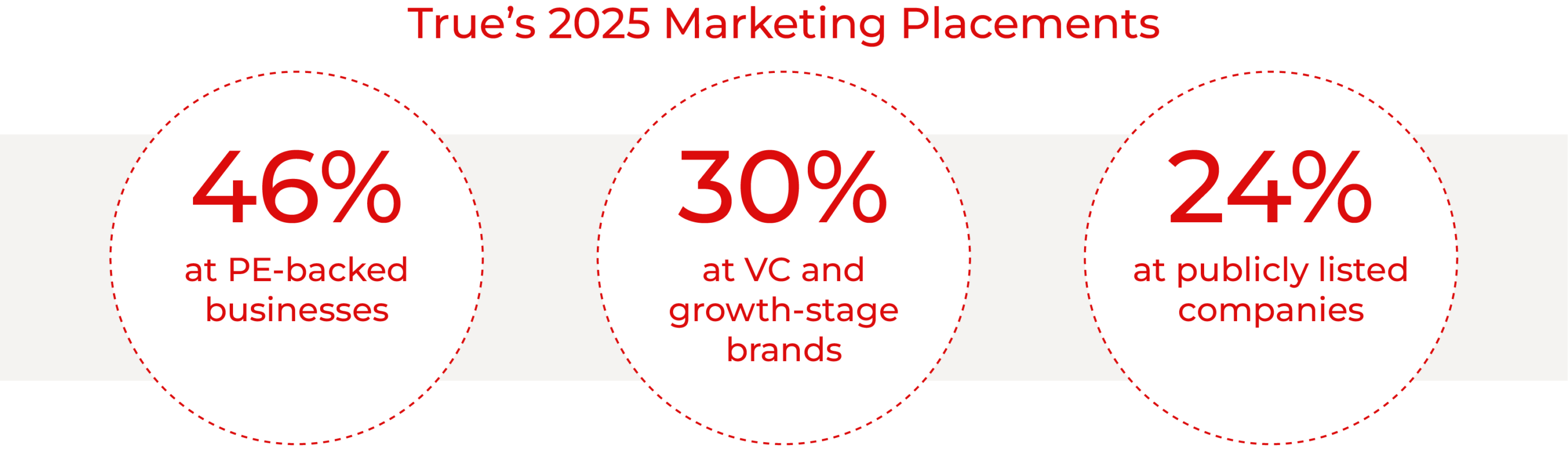
Demand drivers have also shifted, moving the marketing function from growth engine-building towards monetisation, brand discipline, and exit readiness. In 2025, nearly half of our marketing mandates came from PE-backed businesses (46%), with publicly listed companies accounting for 24% and growing year on year. The remaining 30% reflects our work with VC and growth-stage brands.
The Four Essential Leadership Profiles
Four distinct marketing leadership archetypes are emerging from our market intelligence, each reflecting how brand value is now created, protected, and scaled.




Organizational Readiness
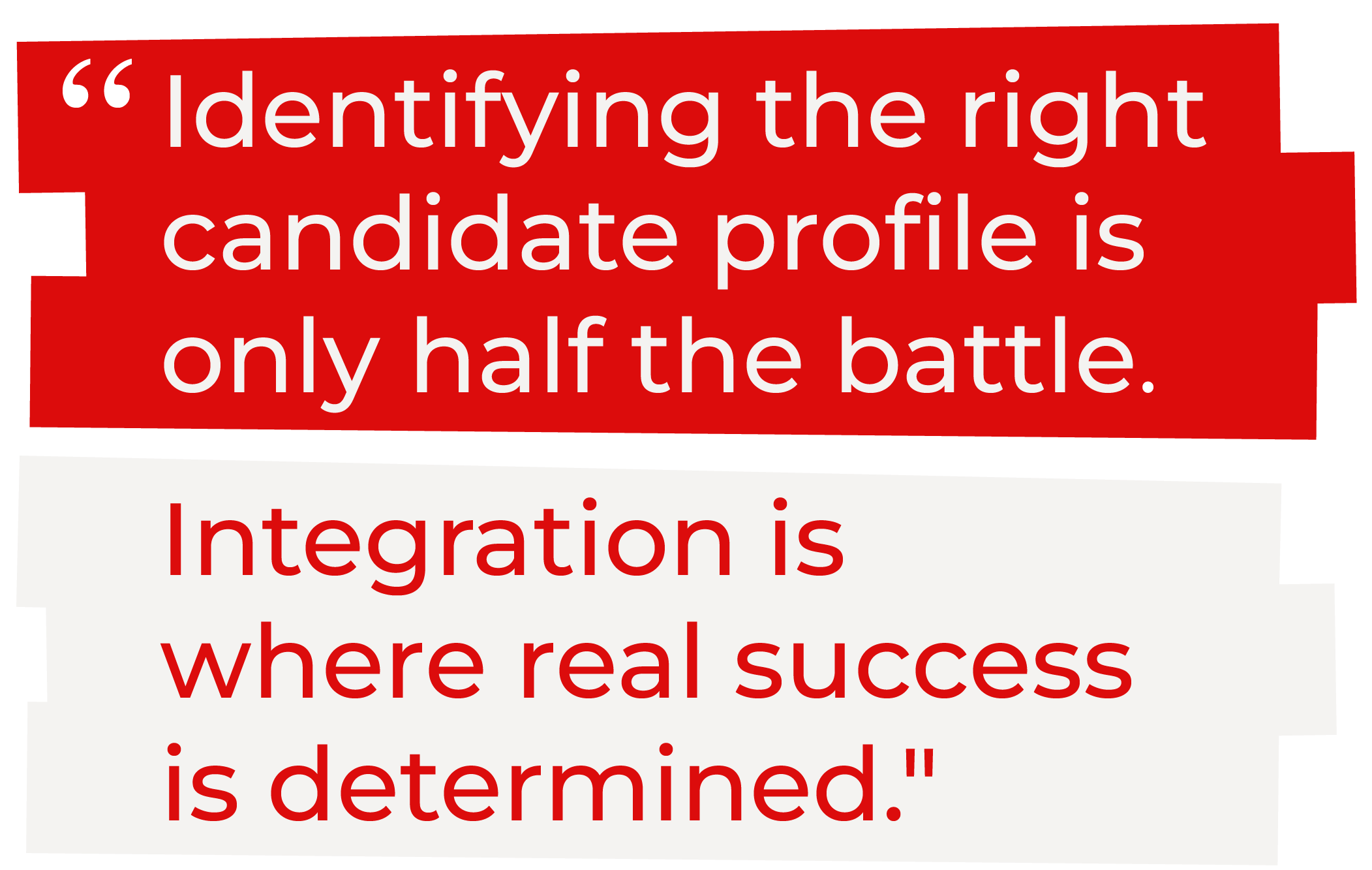
We believe identifying the right profile is only half the battle. Integration is where success is determined. When organisations recruit a disruptor or modern talent without aligning culture, expectations, and resources, they often minimise the very transformation and impact they seek.
In many of our searches, clients recognise that their current organisational setup cannot support the leader they intend to hire. A leadership assessment tool like True Advance and our comprehensive executive mapping tool, TrueView, have become invaluable assets here.
Successful talent integration, therefore, begins before the search by shaping the future organisation, redefining role descriptions and, in some cases, building new teams around the incoming executive to ensure strategic alignment, coherence and fit. The cost of getting this wrong is steep, often resulting in a high failure rate for external executive hires, when the organisation isn’t properly prepared to onboard new talent and embrace change.
Boardroom Buy-in
Because marketing leadership has become transformational rather than functional, early board alignment is critical. The most successful placements happen when boards are involved at the earliest opportunity, co-defining the skillset scorecard, success, and cultural expectations.
Modern CMOs must cultivate strong and trusted relationships with board members to ensure a full buy-in. Without this top-down clarity, even the most talented executive will struggle to gain traction and deliver the desired enterprise impact. This requires the board to actively sponsor the CMO’s integration, give them the greenlight to restructure legacy setups, and hold the entire C-suite accountable for brand health and success.
Culture as Strategy
While we value the dexterity of fast-moving disruptors, we also recognise the value of deep experience. However, the track record of the past is less relevant today than its adaptability for the future.
Across our conversations with industry leaders, a pattern emerges: technical marketing expertise gets candidates “in the room,” but it is value alignment and cultural resonance that drive the final decision. Executives who combine capability and culture alignment with clarity of purpose are the ones to lead brands ahead of the market.
Looking Forward:
The CMO as Future Architect
The CMO is evolving from brand guardian to future architect. The most successful leaders no longer simply ask, “How do we market this?” Instead, they ask, “How do we remain meaningful in a world that keeps rewriting the rules?”
Organisations that recognise this shift and design leadership, structure, and governance accordingly will build brands that endure through volatility rather than react to it. The real question for the board is not whether to invest in marketing leadership, but whether the organization is truly set up to let that leader succeed.


For media inquiries, contact Jillian Ruggieri